
Why CDMO Websites Need to Communicate More Than Capabilities
A successful CDMO website design should make it easy for prospects to find what they need
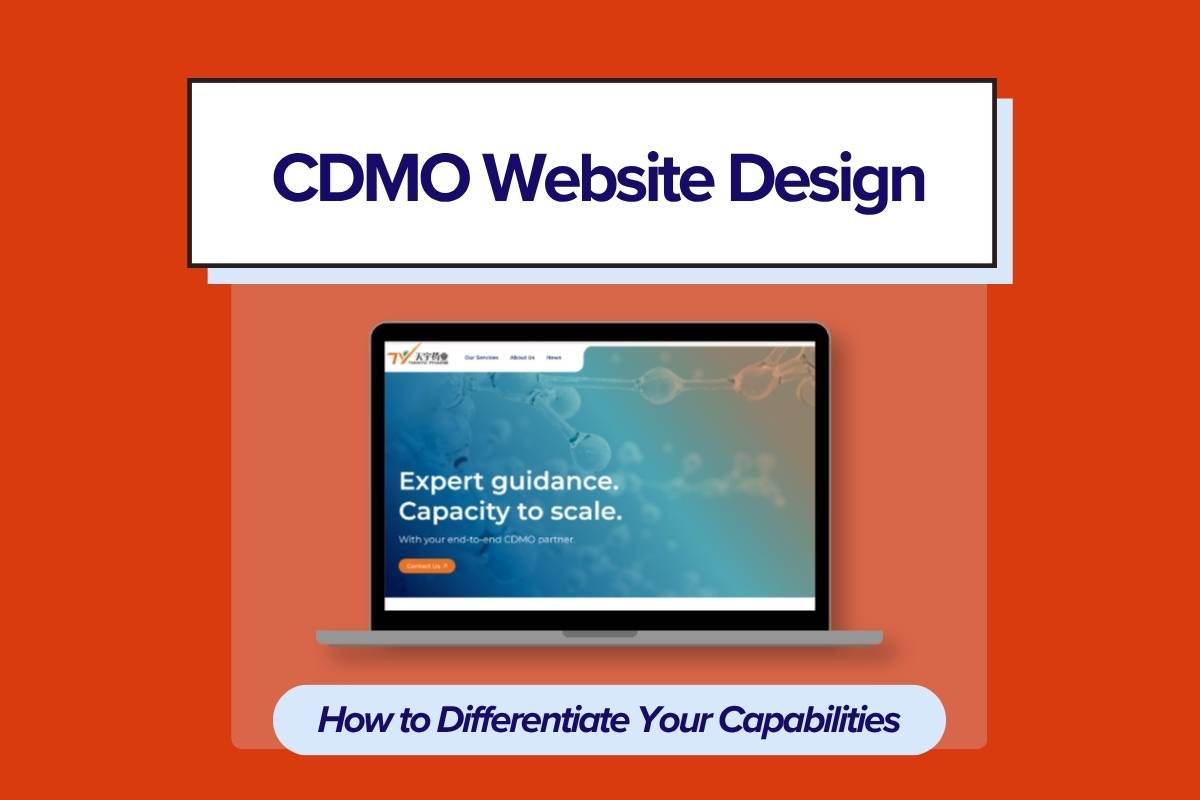
As CDMOs grow, modernize, and thrive, biotech and pharmaceutical companies have more options than ever. Most CDMO websites look fairly similar, and it can be hard to determine which CDMO is right for your growing biopharma. CDMO websites often share similar organization and design. Every CDMO website focuses on expertise, product quality, capabilities, advanced technology, experienced teams, and end-to-end solutions.
The problem with most of these CDMO websites is that they just list products and services; that doesn’t tell a prospective customer why they should choose you or what you can do for them.
Before choosing and researching a CDMO, most biopharma decision-makers will be doing their research, and you can bet that your website is one of the first places they look.
These potential customers want to find key details before finding the right CDMO Match. Some basic questions could be: researching a CDMO. Before contacting business development, they’re trying to determine:
- Does this CDMO have the bandwidth to handle what we need?
- Do they have experience with programs and companies like ours?
- Can we trust what they say, and do they have vetted success examples?
- What makes them different from the other CDMOs we’re considering?
Ultimately, a well-thought-out CDMO website design should make those answers easy for users to find.
Telling the Story: What Makes Your CDMO Different
One of the most critical stages of creating a CDMO website starts long before any design happens, and this is where many companies make their first mistake.
In our experience, CDMO messaging is a key component of building a successful website for your company. Many companies don’t value this part of the process because they “already have content,” which in most cases has been written internally by…scientists.
Taking that first step and setting the stage with the right messaging for a successful user journey is what sets outstanding CDMO websites apart from the competition. You can do the messaging internally, or with a professional team like ours. What matters in the end is taking the time to understand how you are different and what that means for your customers.
A successful CDMO website design sets you apart from your competitors
Some of your CDMO’s differentiators could include:
- Specialized technologies
- Specific modalities
- Experience with difficult or complex programs
- Development through commercial scale
- Regulatory experience
- Unique equipment or facilities
- Speed or flexibility
- Geographic advantages
- Specialized scientific expertise
Just like biotech and biopharma companies, the science behind what CDMOs offer can be complicated. Messaging needs to communicate that information clearly to the audience at hand, making it easier for them to “figure out” whether you are the right CDMO to hire.
Making Your CDMO Capabilities Easy to Find and Understand
Once the messaging is in place, it is easier to move on to the website’s structure. Most CDMO websites we have designed and redesigned include a fairly long list of capabilities. That means you need to organize this information well. You can do this by creating an intuitive navigational sitemap based on what prospective customers are actually looking for. Your job is to make their job easier.
Some possibilities that might be worth considering include:
- Development stage
- Technology
- Modality
- Manufacturing scale
- Services
- Therapeutic expertise
There is no single right structure for all CDMO websites, but it should reflect the key information customers need to evaluate whether you are the right CDMO for their growing biopharma. When someone visits a CDMO’s website for a specific manufacturing need, they shouldn’t have to click through five pages to find it.
A client who visits your website but doesn’t contact you is a customer you don’t even know you lost.
Don’t Just List Capabilities, Explain Why They Matter
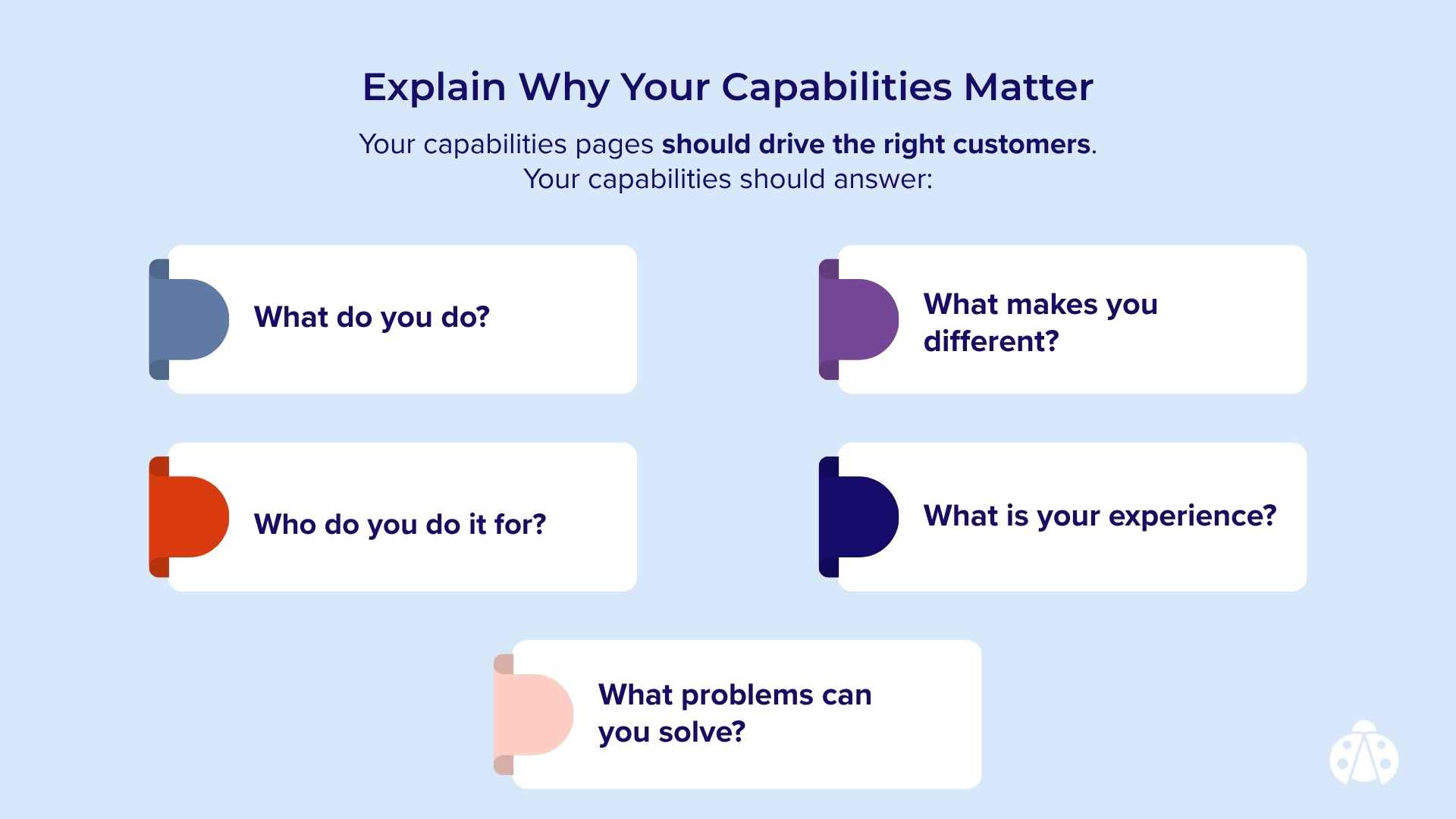
Your capabilities pages should drive the right customers. Your capabilities should answer:
- What do you do?
- Who do you do it for?
- What problems can you solve?
- What makes you different?
- What is your experience?
For example, many CDMO companies can say they offer clinical manufacturing. What differentiates your CDMO is the types of programs you’ve supported, your regulatory experience, your ability to handle challenging projects, your flexibility and customization, and your technology and scale. Ten times out of ten, this is exactly the kind of information your potential customer wants. Speak to your specific client, not everyone.
Show the Proof Behind Your Claims
Your CDMO website design needs to focus on credibility, track record and reputation
You’ve already answered the questions about what you do, who you do it for, and how you’re different; now you need to prove it.
Building credibility and trust is key to keeping a potential client on your website. Some great examples of how you can build trust into your website include the following possibilities:
- Number of programs supported
- Years of experience
- Regulatory milestones
- Certifications
- Specialized equipment
- Facility information
- Manufacturing capacity
- Case studies
- Client success stories
- Scientific publications
- Technical resources
- Experienced leadership/scientific teams
- Thought leadership
When talking about your CDMO’s experience and knowledge, make the information specific to your users instead of using generic, blanket statements. Talk to them as if you are in front of them, explaining how specific experience or credentials relate to their success.

Let Prospects See Your CDMO’s Facilities, Technology and People
Now that we have shown the proof behind your claims, it’s time to show your customer that you are a real manufacturing facility with real people and state-of-the-art equipment and technology.
Custom photography is a great way to capture your potential customers’ attention. This can also help you stand out from competitors. Many CDMOs lack marketing teams or expertise and may not value the importance of what we’re discussing in this article, but investing in strong content, solid design, and great photos to back up that story is a winning combination.
In the past we’ve done photoshoots that have included:
- Equipment photography
- Manufacturing environments
- Team photography
- Video of the team/processes
- Facility diagrams
- Process graphics
- Technology illustrations
- Clean rooms
- Laboratories
CDMO websites that include their own (professional) photography feel more personal, and great visuals make for an excellent customer journey. Great photos are likely to hold your potential customer’s attention and spark a little more curiosity. Your facilities, equipment, people, and technology are part of your story and what sets you apart from competitors.
Use Website Design to Make Complex Information Simpler
With all this great messaging, organization, and visuals, strong design and a great user experience help keep your information from becoming too dense, crowded, or intense.
Light, simple modern design works especially well on CDMO websites.
Navigation
Clear, simple, well-organized navigation helps your users move around and find information easily. If they get lost, they can always simply go back to the navigation. Intuitive navigation is especially important for people who are looking for something specific and not just browsing, meaning very interested prospects.
Scannable Content
Keep content scannable. You can do this with clean headlines, short blocks of text, and extra white space.
Diagrams
Scientific diagrams are popular on biotech websites, and CDMOs are no exception. If your users are used to diagrams, provide them in a clean, uncomplicated, uncluttered format. It might be worth redrawing older diagrams using the website’s new design and color as inspiration while keeping diagrams technically sound.
Icons
Custom icons are visually appealing and break up content nicely. Designers can get creative with icons, and on a simple, modern website, simple design elements like icons can improve the look and feel of the site while drawing attention to important details.
Process Graphics
Again, if graphics are commonly used to explain processes, keep them on the website. Some users resonate better with graphics, while others resonate better with the text explaining it. Cover both bases if you need to. You can never overexplain complicated processes.
Interactive Elements
With newer web design technology, interactivity has become popular on biotech websites. If it works on biotech websites, it can work on CDMO websites for biotech and biopharma customers. Use interactive elements intuitively and lightly; you don’t want to overstimulate the user with too many moving parts.
Strong Hierarchy
Strong hierarchy is how information is organized on a page by importance. For example, the main headline is the most important, while subheadings are less important, but this hierarchy makes text more scannable and is great for search engines and AI assistants.
Strategic Use of Technical Detail
Technical details can be overwhelming, so use them strategically and don’t lose users by burying irrelevant information. Pull out the important details so they are easy to see, and link to those PDFs, papers, etc. using those shorter details.
Overall, keep the site simple, with the right amount of visuals, to keep users interested and moving to the next step: contacting you.
Make It Easy for the Right Prospects to Take the Next Step
Now that you have invested time in telling the right story, creating differentiators, building trust, and visually guiding potential clients through the process, it is time for them to take the next step: contacting you.
Once a potential client finds the right capability, they shouldn’t have to hunt around for what to do next. Make it obvious by using CDMO-specific “calls to action” or buttons or links telling the user what to do.
Many websites use generic calls to action like “Contact Us” or “Inquire Now,” but with a CDMO you can have more specific calls to action that speak more specifically to your user.
Some great examples of calls to action include:
- Discuss Your Program
- Talk to Our Technical Team
- Explore Our Capabilities
- Learn About Our Facilities
- Request More Information
You don’t want the website to feel too “salesy” but you do want to speak to that user and where they might be on the website.
Your CDMO Website Design Should Answer One Question: Why You?
When a prospective CDMO customer browses your website, you need to make their job easier. That means making sure they know what you do, proving it, helping them find what they need, and, in general, giving them a pleasant, easy user experience.
Your CDMO website reflects your company; having the best website in place already sets the tone for what it’s like to work with you. Having a successful website means you already have one foot in the door.