
Building Trust, Improving Patient Recruitment, and Supporting Clinical Success
Entering clinical trials changes the purpose of a company’s website. Whereas a corporate biotech website is designed to explain the company, attract investors, and showcase its science, a clinical trial website is rooted in a much more personal mission. It is designed to help patients, caregivers, physicians, and investors make informed decisions about participating in research.
This issue goes beyond a design challenge; it is more of a communication challenge. Patients are often visiting because they have recently received a diagnosis or are searching for additional treatment options. They are looking for clarity, reassurance, and trustworthy information—not scientific marketing language.
Patients may arrive from physician referrals, advocacy groups, ClinicalTrials.gov, Google, or AI-powered search tools such as ChatGPT and Perplexity. No matter how they get there, your website is often their first meaningful interaction with your study.
First impressions count. Patient recruitment and retention remain among the greatest challenges in clinical research. Research shows that ineffective recruitment and retention can have significant scientific, economic, and ethical consequences, making every patient touchpoint (including your website) an important part of the recruitment experience.
What are the key elements of effective clinical trial website design, and what is the right approach to improve patient engagement, recruitment, and overall trial success?
What Is a Clinical Trial Website?
There’s no one-size-fits-all answer to this. In fact, a clinical trial website can take many forms, and the format you choose will depend on your organization’s goals, recruitment needs, and stage of development.
A clinical trial website might be:
- A clinical trials section within a biotech website
- A dedicated recruitment website
- An individual study microsite
- A CRO-managed recruitment portal
- A research site website listing available studies
The right solution depends on several factors, including:
- Company size
- Number of active trials
- Recruitment strategy
- Audience
- Budget
In the end, the most effective clinical trial website is one that supports your recruitment strategy while making it easy for patients and other audiences to find the information they need.
Clinical Trial Websites Have a Different Purpose Than Corporate Biotech Websites
Clinical trial websites solve completely different problems than corporate biotech websites.
A corporate biotech website is designed to communicate innovation, attract investment, recruit employees, and establish credibility.
A clinical trial website is designed to answer questions, reduce anxiety, and help people decide whether participating in research is the right choice.
Cutting corners by combining the two is a risk. In fact, copying corporate messaging onto trial pages rarely works. Why?
Patients do not care about Series B funding or platform technology. They want to know whether a study is relevant to them. It is a highly personal process, which is why clinical trial website design requires professional, thoughtful oversight.
This patient-first approach aligns with health literacy principles, which emphasize creating information that people can find, understand, and use when making decisions about their health.
Do Pharmaceutical Companies Need a Separate Clinical Trial Website?
A dedicated clinical trial website is certainly a more focused way to organize important study information in one place. However, a separate website is not always necessary, especially for smaller studies or situations where recruitment is already being managed through established channels.
For example, a dedicated clinical trial website may not be needed for:
- Early-stage biotech companies with limited resources or a single study
- Organizations with only one recruiting trial and a small target audience
- Trials where recruitment is primarily handled through hospitals, physicians, or research sites
- Studies that rely heavily on ClinicalTrials.gov or existing referral networks
To decide, you will need to consider the complexity of the trial, your organization’s recruitment goals, and the level of support patients will require throughout the enrollment process.
That said, there are many situations where a separate website is the better option, particularly for:
- Companies managing multiple recruiting trials
- Organizations working across several disease areas
- National or global recruitment campaigns
- Studies supported by digital advertising
- Rare disease trials where reaching eligible participants can be difficult
- Decentralized or hybrid trials that require ongoing participant support
- Programs that need to serve patients, caregivers, physicians, and investigators with different types of information
There is also a third option: a hybrid approach. In this model, the corporate website communicates company information, scientific progress, and investor updates, while directing patients to a dedicated recruitment website designed around their unique needs.
Understanding the Clinical Trial Candidate’s Patient Journey
A clinical trial website should cater to the experience of the person using it rather than the goals of the organization fueling the study. For many patients, visiting a trial website is part of a much larger journey that begins with a diagnosis, uncertainty, and a search for answers.
At each stage, patients have new questions and concerns. A successful clinical trial website anticipates those questions and provides clear information that not only informs visitors but puts them at ease.
Here’s a look at a typical patient journey:
- Patient receives diagnosis
- Researches treatment options
- Finds trial through physician, Google, advocacy group, AI search, or ClinicalTrials.gov
- Visits website
- Shares website with family
- Reads FAQs
- Contacts coordinator
- Schedules screening
- Enrolls
Within each stage of this journey, the patient has questions and concerns. They are feeling anxious, overwhelmed, hopeful, and even skeptical. They need a dedicated outlet to explore those concerns while finding the information they need quickly and easily. Strong clinical trial website design will actually answer their questions before they have to ask them.

What Should Every Clinical Trial Website Include?
Effective clinical trial website design should lay out all the information the patient could possibly need before they reach out to the study team. Not only does this inform patients, it also builds the trust and confidence needed to take the next step.
Key features include:
- A plain-language study overview: This will explain the condition, treatment, and purpose of the research without bogging down the content with overly scientific or protocol language.
- Clear eligibility criteria: This allows patients to quickly determine whether they may qualify before they get into more detailed requirements.
- An easy-to-follow study timeline: This will outline visits, treatment schedules, follow-up appointments, and the expected time commitment.
- Location and travel information: This will include study sites, maps, parking, remote participation options, and available travel assistance if applicable.
- Multiple contact options: This gives patients a wide range of choices on how to contact you, whether via phone, email, online forms, or appointment scheduling portals.
Frequently Asked Questions
A comprehensive FAQ section is a must-have for any clinical trial website. Not only does it provide visitors with quick answers to common concerns, it helps them feel more informed along the way.
Common questions often include:
- Can I leave the study if I change my mind?
- Will I receive a placebo?
- Does insurance cover any study-related costs?
- Can I continue taking my current medications?
- Can a family member or caregiver attend study visits with me?
By answering these questions upfront, organizations can reduce uncertainty, build trust, and help patients decide whether a trial may be right for them. An FAQ section will also address repetitive inquiries, reducing the amount of time study coordinators have to spend answering study-specific questions.
Different Visitors Need Different Information
Not every visitor arrives with the same goals, so a clinical trial website should provide resources tailored to different audiences.
- For patients and caregivers: Include educational videos, downloadable brochures, caregiver information, transportation resources, support organizations, and study checklists to help visitors understand what participation involves before reaching out.
- For physicians and research partners: Provide protocol summaries, publications, referral forms, and investigator contact information to make it easier to evaluate and refer potential participants.
Assure Visitors of Privacy & Security
Patients should feel confident in providing personal information, so your clinical trial website should build trust by including:
- Secure forms
- SSL encryption
- A clear privacy policy
- Cookie consent
- HIPAA compliance (where applicable)
Following recognized accessibility standards, such as the Web Content Accessibility Guidelines (WCAG), helps clinical trial websites create a more inclusive experience for patients, caregivers, and other visitors with different accessibility needs.
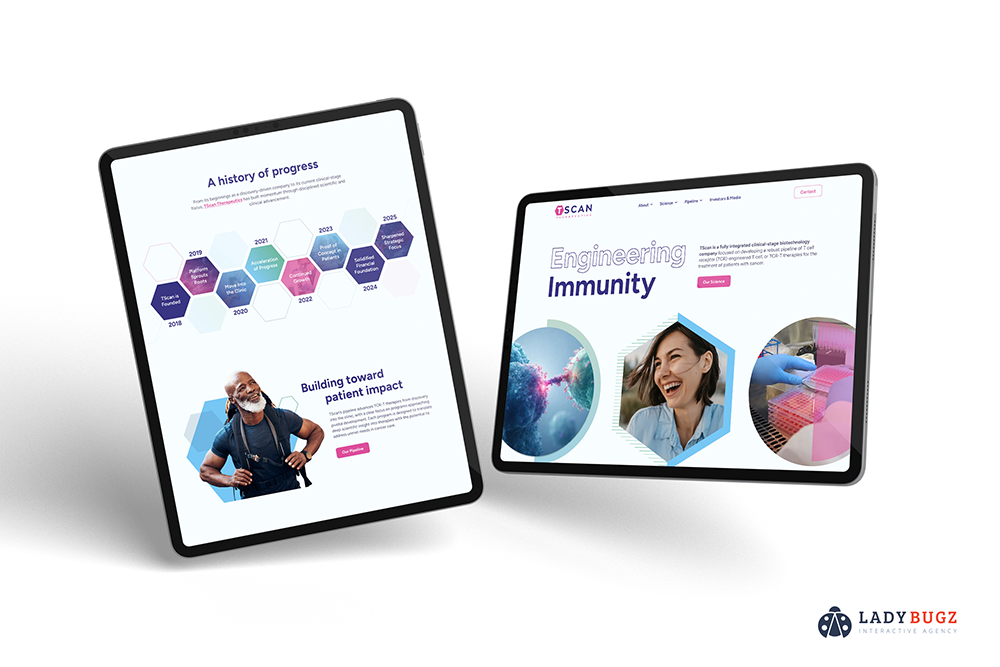
Building Trust is Essential in Clinical Trial Website Design
Flashy designs and fancy marketing language only go so far. It’s more important to provide clear, honest, and reassuring information that helps patients feel confident they’re in the right place.
Establish credibility by including:
- Investigator biographies and physician introductions
- Videos from researchers or study teams
- Research partners and institutional affiliations
- Publications and clinical milestones
- Authentic photography over generic stock images
- Transparent explanations of what participants can expect
- Professional design and consistent branding
Study legitimacy should be reinforced on every single page to ensure patients feel supported throughout the process.

Modern AI-Powered SEO and AEO for Clinical Trial Websites
If people can’t find your website, they can’t participate. That’s why search engine optimization is so important. Connection: this is what SEO does, bridging patients to the information they need.
Keep in mind, patients rarely search using scientific terminology. For example, researchers may refer to a “KRAS G12C inhibitor,” while patients are more likely to search for “lung cancer clinical trial near Boston.”
Be sure to include:
- Plain-language headings and content
- Location-specific study pages
- Helpful FAQs
- Structured data (schema markup)
- Content optimized for AI-powered search tools
Focus on how patients actually search to improve your chances of being discovered.
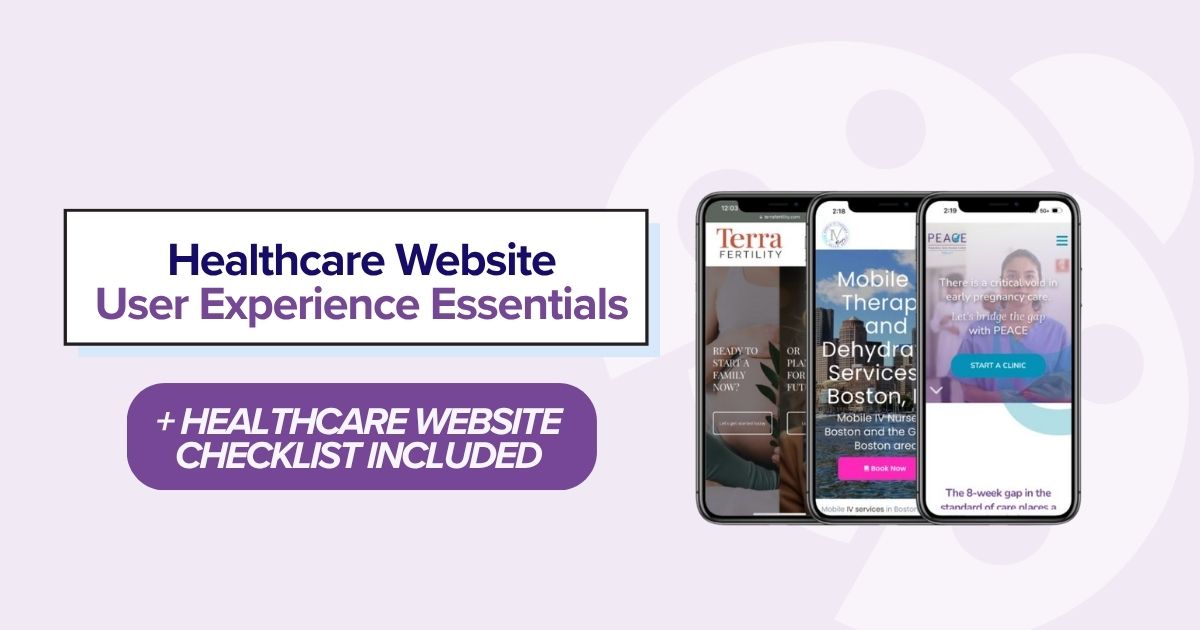
Mistakes You Don’t Want to Make Creating Your Clinical Trial Website
Even well-intentioned clinical trial websites can create barriers for patients. Some of the most common issues include:
- Writing for scientists instead of patients
- Copying protocol language directly onto the website
- Burying contact information or next steps
- Relying on PDFs rather than searchable web pages
- Overlooking caregivers as part of the audience
- Poor mobile usability and accessibility
- Using generic imagery
- Omitting local study information or locations
Writing to your core audience and anticipating their needs is a critical part of clinical trial website design.
Questions Every Sponsor Should Ask Before Launching a Clinical Trial Website
It’s important to take a big-picture view of your website and content and approach it with fresh eyes. Encourage strategic thinking by asking questions such as:
- Could someone understand this without a medical background?
- Can visitors quickly determine whether they may qualify?
- Is the next step obvious?
- Does the website answer the questions patients are most likely to ask?
- Would a caregiver find the information they need?
- Is the content organized well enough for AI-powered search tools to understand?
Remember: effective clinical trial websites are built around the user, not the organization.
What is the Right Approach To Website Design for Clinical Trials
At Ladybugz, we believe clinical trial websites are more than digital brochures; they are tools that connect research teams with patients, caregivers, and healthcare providers. We use a three-pronged approach that combines strategy, user experience, and technical expertise. The result? Clear, accessible, focused websites that not only support recruitment goals but provide peace of mind to the end user.
Our process includes:
- Discovery workshops and audience research
- Patient-first messaging and information architecture
- Accessible, user-friendly design
- Search engine optimization
- Flexible WordPress development built for long-term scalability
By combining biotech communication expertise with thoughtful web strategy, Ladybugz helps organizations create clinical trial websites that build trust, improve engagement, and support the research journey from start to finish.